Back Pain and Erectile Dysfunction: What Men Should Know
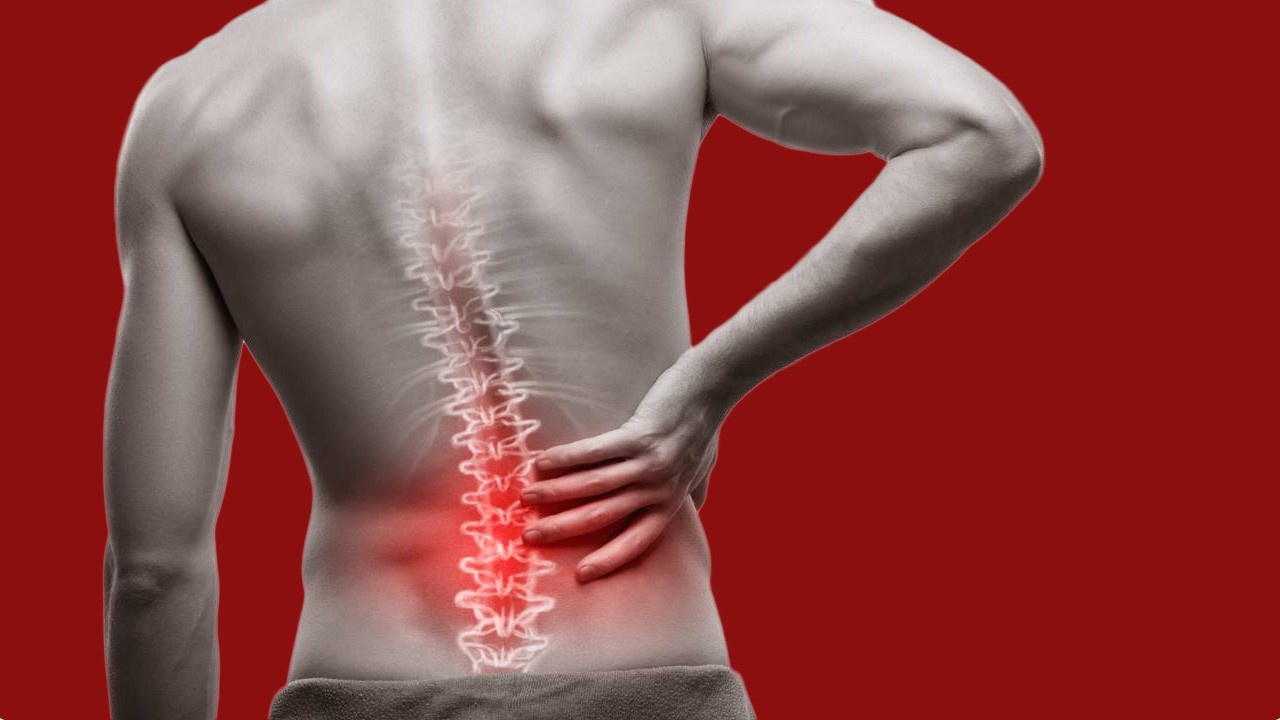
Your erection does not exist separately from the rest of your body.
If your lower back is tight, your hips barely move, your breathing is shallow, and your nervous system never seems to switch off, it makes sense to wonder whether these patterns could also be affecting your sex life.
The honest answer is:
Sometimes—but the relationship is rarely as simple as “tight back equals erectile dysfunction.”
Back pain, pelvic tension, chronic stress, nerve irritation, medication, performance anxiety, and disconnection from bodily sensation can all influence sexual function. But erectile dysfunction can also be connected to cardiovascular health, diabetes, hormones, neurological conditions, medications, depression, anxiety, and other medical factors.
That means you should not assume your erection problems are merely caused by tight hips—or that stretching your hamstrings will solve everything.
But you also should not assume that your body, nervous system, and emotional experience have nothing to do with it.
They often do.
Important medical note: New, persistent, or worsening erectile dysfunction should be discussed with a qualified healthcare provider. ED can sometimes be an early marker of cardiovascular or other health conditions.
The Connection Between Back Pain and Erectile Dysfunction
Lower back pain does not ordinarily cause erectile dysfunction through one single mechanism.
Instead, several overlapping factors may be involved.
1. Chronic Pain Changes Your Sexual Response
Pain demands attention.
When part of your brain is continually tracking discomfort, protecting an injured area, or anticipating the next painful movement, it becomes harder to relax into pleasure.
You may begin avoiding certain positions. Your breathing may become more restricted. Your abdomen, buttocks, hips, and pelvic floor may brace in anticipation of pain.
Over time, sex can begin to feel like another physical challenge rather than an experience of pleasure and connection.
Research involving people with chronic pain has found higher levels of sexual dysfunction, reduced sexual satisfaction, anxiety, and depressive symptoms compared with people who are not experiencing the same pain burden.
This does not mean the pain is “all in your head.”
It means pain affects your entire system.
2. Your Pelvic Floor Is Part of Your Sexual System
Most men have heard of the pelvic floor, but many have never learned to feel it.
The pelvic floor is a group of muscles located at the base of the pelvis. These muscles contribute to bladder and bowel control, core stability, erection, ejaculation, and orgasm. A healthy pelvic floor needs to contract when contraction is required—and relax when relaxation is required.
The important word is coordination.
Some men have pelvic-floor muscles that are weak.
Others have muscles that are chronically tense, overactive, poorly coordinated, or difficult to relax.
And some men have a combination of weakness and excessive tension.
Research suggests that properly prescribed pelvic-floor rehabilitation can improve erectile function and may also help some men experiencing premature ejaculation. However, there is no single training protocol that is appropriate for everyone.
This is why blindly doing hundreds of Kegels is not necessarily the answer.
A muscle that is already clenched does not always need more clenching.
It may first need awareness, mobility, relaxation, coordination, and professional assessment.
3. The Back, Diaphragm and Pelvic Floor Work Together
Your pelvic floor is not an isolated set of muscles.
It works in relationship with your diaphragm, abdominal wall, hips, and deeper spinal muscles. Together, these structures help regulate pressure and stability through your trunk.
When you inhale naturally, your diaphragm descends and your pelvic floor should be able to respond. When you exhale, pressure changes again.
But many men do not breathe this way.
They hold their stomach in.
They brace their abdominal muscles.
They clench their buttocks.
They grip through the pelvic floor.
They breathe into the upper chest while keeping the centre of the body rigid.
This may happen because of pain, stress, shame, athletic habits, posture, trauma, or years of trying to appear strong and composed.
Eventually, the body can forget how to soften.
And sexual arousal requires some capacity to soften.
Can Tight Hip Flexors Cause Erectile Dysfunction?
There is not strong evidence that tight hip flexors directly cause erectile dysfunction.
That claim is too simplistic.
However, tight hip flexors may be one part of a larger pattern involving prolonged sitting, reduced hip mobility, back pain, abdominal bracing, shallow breathing, pelvic-floor tension, and chronic nervous-system activation.
In other words, your hip flexors may not be the cause.
But they may be part of the picture.
Pay attention to the wider pattern:
- Can you breathe comfortably into your lower ribs and abdomen?
- Can your belly soften without immediately feeling vulnerable or self-conscious?
- Do you constantly clench your buttocks or pelvic floor?
- Do you feel numb around your pelvis?
- Can you distinguish pelvic-floor contraction from pelvic-floor relaxation?
- Does your back or pelvic pain increase during or after sex?
- Do you become mentally vigilant as soon as sexual activity begins?
These questions may reveal more than simply testing whether you can touch your toes.

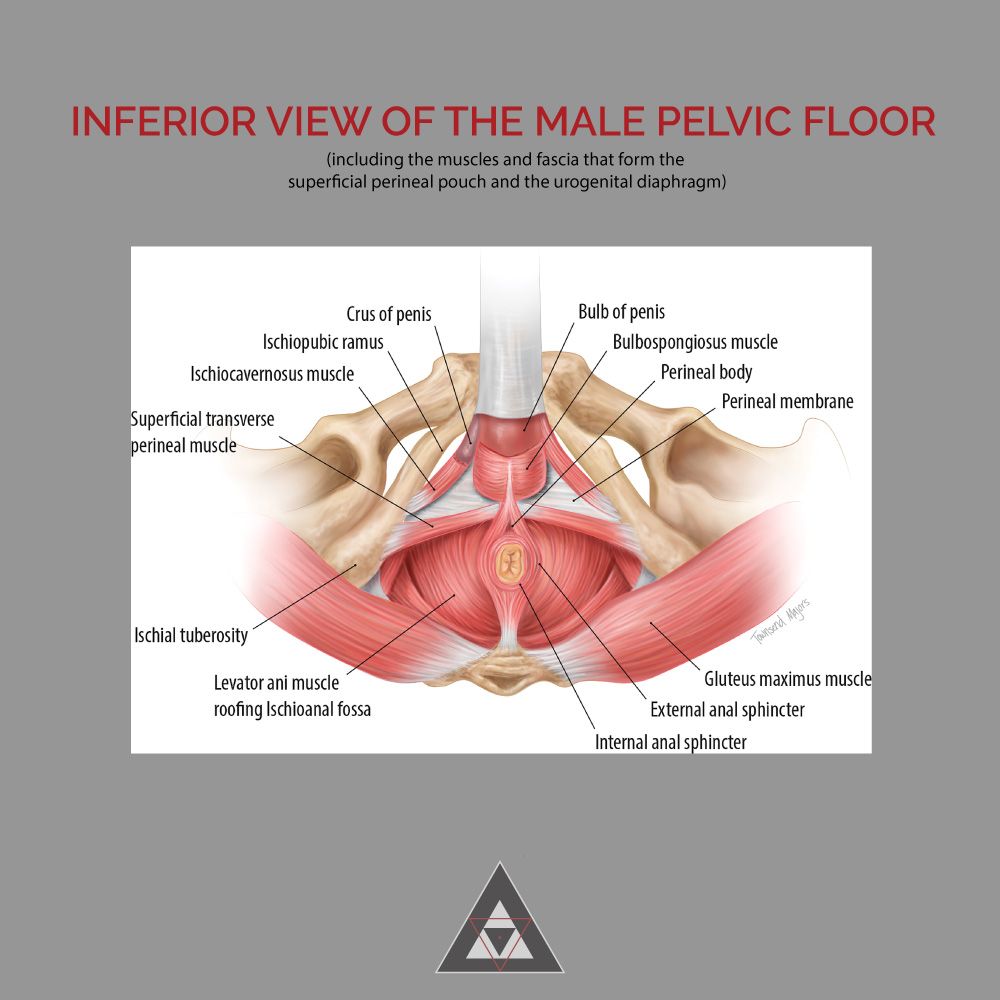
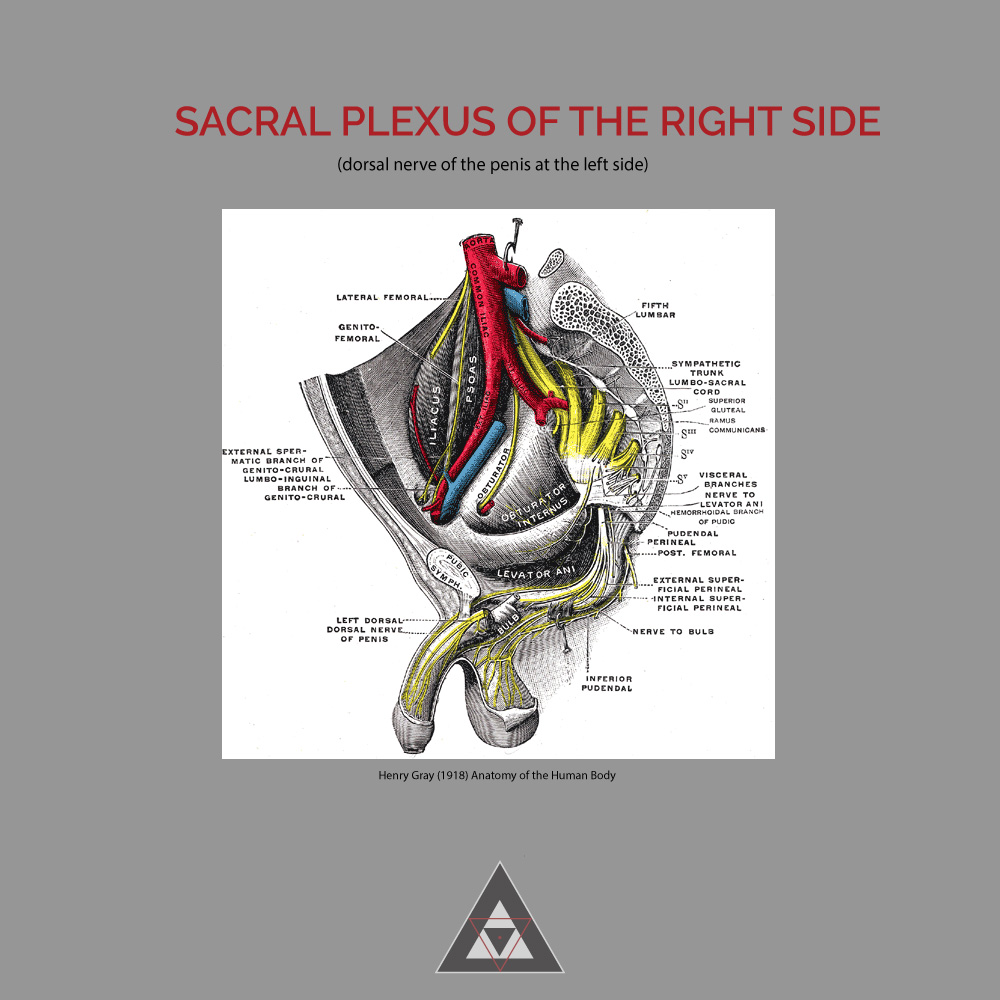
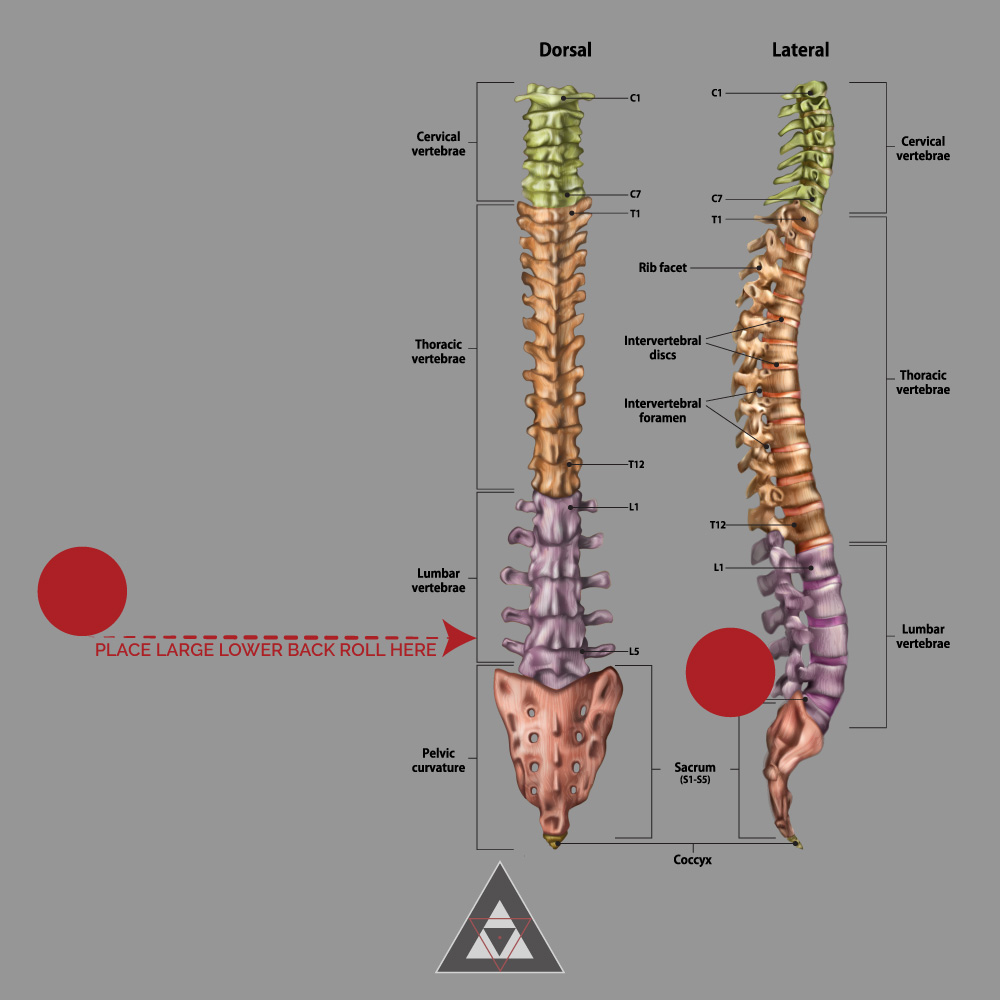
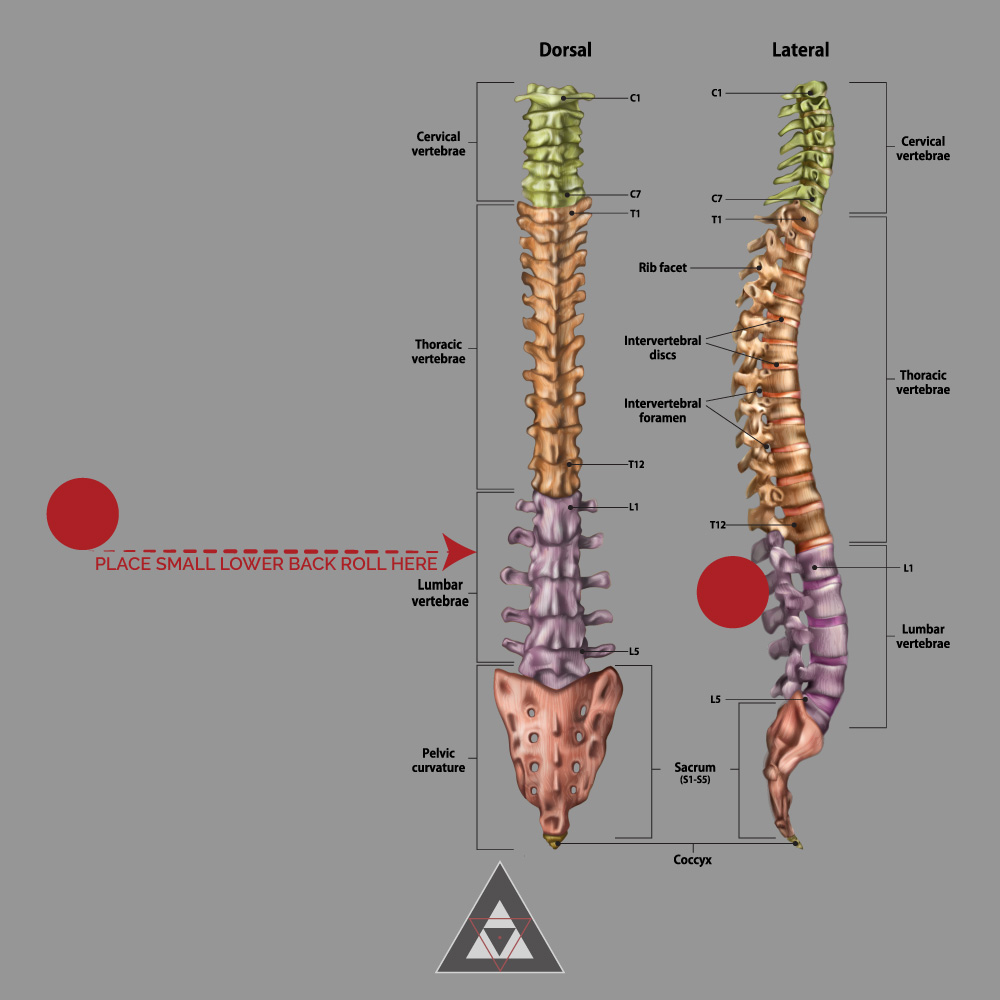
As you can see from the images, there is a lot of muscle and fascial tissue that connects through the abdominal and pelvic region which influences the urogenital function. I'm guessing a tight pelvic floor isn't something you've considered before!
Tight hip flexors can be freed from their grip by remobilizing the lower vertebrae of the spine, SI joints, and hips. This takes time, persistence, and a safe method. Follow along with the videos in the free mini-course to achieve some freedom from your tight hip flexors.
Can Sciatica Cause Erectile Dysfunction?
Ordinary sciatica does not necessarily cause erectile dysfunction.
The sciatic nerve is not the primary nerve controlling erection. However, severe spinal or nerve compression can affect sexual function, particularly when the lower spinal nerves involved in pelvic sensation, bladder function, bowel function, or sexual function are compromised.
Sudden sexual dysfunction combined with severe back pain, numbness around the genitals or inner thighs, bladder or bowel changes, or significant leg weakness requires urgent medical assessment. These can be warning signs of cauda equina syndrome, a rare but serious spinal emergency.
Do not attempt to stretch, breathe, meditate, or “release” your way through those symptoms.
Get medical help.
Stress, Anxiety and Erectile Dysfunction
Sexual performance is one of the easiest places for anxiety to become self-reinforcing.
Perhaps you lose your erection once.
The next time you have sex, part of you begins monitoring:
Is it working?
Am I hard enough?
Is she noticing?
What if it happens again?
Now your attention is no longer inside the sexual experience. It is outside your body, evaluating your performance.
You are attempting to create an erection while simultaneously testing whether you have one.
That internal surveillance can interfere with arousal, pleasure, sensation, and connection. Mental and emotional factors—including anxiety, depression, stress, relationship difficulties, and fear—are recognized contributors to erectile dysfunction.
The more embarrassed or frightened you become, the more your body may brace.
The more it braces, the less sensation you feel.
The less you feel, the harder you try.
And the harder you try, the more sex becomes a performance.
Stress and Premature Ejaculation
Premature ejaculation can also involve a combination of physical and psychological factors.
Some men approach sexual contact with an enormous amount of activation already present. They may be excited, anxious, vigilant, ashamed, hungry for approval, or afraid of disappointing their partner.
Their arousal climbs quickly because they have limited capacity to remain present inside increasing sensation.
This is not simply a matter of “thinking distracting thoughts” or squeezing the correct muscle.
It is often a regulation issue.
Can you feel your arousal building without immediately trying to escape, suppress, or discharge it?
Can you remain connected to your breathing?
Can you soften your jaw, abdomen, buttocks, and pelvic floor?
Can you communicate with your partner rather than silently trying to manage everything yourself?
Pelvic-floor rehabilitation may help some men experiencing premature ejaculation, but emotional regulation, body awareness, communication, and performance anxiety may need attention as well.
Why More Kegels May Not Be the Answer
You have probably encountered advice telling men to strengthen the pelvic floor by repeatedly stopping the flow of urine or performing Kegel exercises throughout the day.
Pelvic-floor strengthening can be useful when weakness is actually the problem.
But pelvic-floor dysfunction can involve muscles that are too weak, too tense, or unable to coordinate contraction and release properly. Treatment for pelvic-floor overactivity often focuses on relaxation, retraining, and reducing myofascial tension—not simply adding more contraction.
A pelvic-floor physiotherapist can assess what your muscles are actually doing.
That is far more useful than diagnosing yourself from a YouTube video.
Where Somatic Therapy Fits
Somatic therapy is not a substitute for medical care, urology, pelvic-floor physiotherapy, or appropriate treatment for a spinal injury.
It addresses a different—but frequently overlooked—part of the problem.
In somatic therapy, we pay attention to how your nervous system organizes around sexuality, intimacy, vulnerability, pleasure, and performance.
That may include exploring:
- Chronic bracing through the back, abdomen, hips, or pelvis
- Difficulty sensing parts of your body
- Performance anxiety and self-monitoring
- Shame about your body or sexuality
- Fear of disappointing a partner
- Past sexual experiences that still affect your nervous system
- Difficulty receiving pleasure or remaining present
- Emotional disconnection from your partner
- The belief that sex is something you must successfully perform
- The pressure to appear strong, confident, and always ready
Many men understand their sexual problem intellectually.
They know they are anxious.
They know they should relax.
They know their partner is not judging them as harshly as they judge themselves.
But knowing that does not automatically change what happens in the body.
Somatic work helps you notice the pattern while it is happening.
Instead of forcing yourself to relax, you begin developing enough internal awareness and safety that relaxation becomes possible.
A Simple Place to Begin
Without forcing anything, lie comfortably on your back with your knees bent and your feet supported.
Notice your contact with the floor.
Do not immediately try to change your breathing.
First, observe:
Where are you holding yourself up?
Is your jaw clenched?
Is your abdomen pulled inward?
Are your buttocks gripping?
Can you feel the area between your sitting bones?
As you inhale, allow the lower ribs and abdomen to expand naturally.
As you exhale, imagine the weight of your pelvis being received by the surface beneath you.
Do not squeeze your pelvic floor.
Do not push it downward.
Simply notice whether it can respond to your breathing without being commanded.
The goal is not to produce an erection or prove that you are relaxed.
The goal is to begin rebuilding an honest relationship with what your body is doing.
What Treatment Might Include
Depending on the cause, meaningful treatment may involve more than one form of support:
- A medical assessment to investigate cardiovascular, hormonal, neurological, metabolic, or medication-related factors
- A pelvic-floor physiotherapist to assess strength, tension, coordination, and pain
- Appropriate treatment for back pain or spinal injury
- Somatic therapy for nervous-system regulation, trauma, shame, and body disconnection
- Sex therapy or couples therapy for performance anxiety, communication, and relationship patterns
- Changes to sleep, exercise, alcohol use, smoking, stress, or other lifestyle factors
- Medication when medically appropriate
Medication and deeper body-based work do not have to be enemies.
A prescription may help someone regain sexual function while he addresses pain, health, anxiety, relationship strain, or nervous-system patterns.
The mature approach is not to reject one side.
It is to understand the whole system.
Your Body Is Not Failing You
Sexual difficulties often produce shame because men are taught to experience an erection as evidence of masculinity, desire, competence, and worth.
But your body is not a machine that has failed a performance test.
An erection is a complex physiological and relational response.
It is influenced by blood flow, nerves, hormones, physical comfort, emotional state, attention, trust, attraction, history, and context.
Your symptoms deserve medical attention when appropriate.
They may also deserve curiosity.
What happens in your breathing when intimacy begins?
Where does your body tighten?
What are you afraid might happen?
When do you stop feeling and start performing?
These questions do not reduce sexual dysfunction to psychology.
They restore the parts of the experience that are often ignored.
Somatic Therapy for Men in Calgary and Online
At The AUM Institute, we work with men who are intelligent, self-aware, and often highly capable—but who feel disconnected from their bodies, relationships, sexuality, or emotional lives.
Our approach combines nervous-system regulation, body awareness, trauma integration, attachment work, and direct relational support.
We will not tell you that every sexual issue is caused by trauma.
We will not tell you to abandon medical treatment.
And we will not reduce you to a diagnosis or a malfunctioning body part.
We will help you become more aware of the patterns operating underneath your symptoms, build your capacity to remain present, and reconnect with more of yourself.
If back pain, pelvic tension, stress, shame, or sexual performance anxiety seem to be part of a larger pattern, begin with a Free Consultation.
Together, we can explore what your system may be communicating—and what kind of support makes sense next.